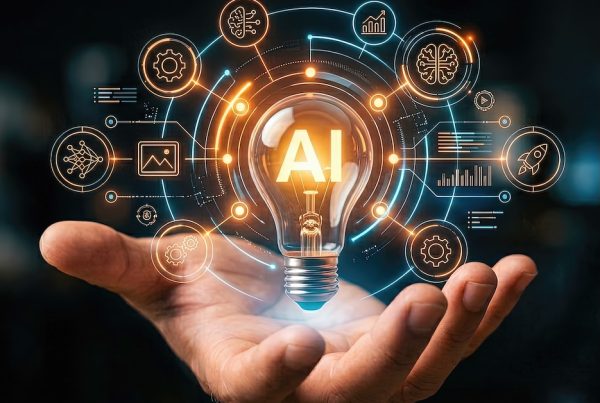

Artificial intelligence is helping teams automate tasks, improve productivity, and make faster decisions. At the same time, it is giving cybercriminals new tools to identify vulnerabilities, craft convincing phishing attacks, and scale their efforts in ways that were not possible just a few years ago.
For many mid-sized businesses, this shift is exposing cybersecurity blind spots that may have existed for years. Gaps in visibility, outdated systems, inconsistent security controls, and limited recovery planning can all create opportunities for attackers.

According to Verizon’s 2026 Data Breach Investigations Report, ransomware and other extortion-related techniques were involved in nearly half of the data breaches analyzed. As threats continue to evolve, businesses need more than a collection of security tools. They need a layered defense strategy that helps them identify risks, protect critical assets, detect suspicious activity, respond effectively, and recover quickly.
Key Takeaways
- AI is helping cybercriminals automate and personalize attacks, making threats harder to spot with traditional warning signs.
- Mid-sized businesses are increasingly targeted because they hold valuable data while typically running leaner security teams and budgets than large enterprises.
- Cyber resilience focuses on keeping the business going and recovering quickly when incidents occur.
- The NIST Cybersecurity Framework provides a practical roadmap for managing cybersecurity risk.
- A layered defense strategy reduces reliance on any single security control.
- Regular cybersecurity assessments can help uncover blind spots before attackers find them.
What Cyber Resilience Means in Today’s Threat Landscape
Most organizations invest in cybersecurity. Fewer spend enough time thinking about what happens after an attack succeeds.
Cybersecurity focuses on preventing threats and protecting systems from unauthorized access. Cyber resilience takes a broader view. It considers how an organization will continue operating when security incidents occur and how quickly it can recover.
This mindset has become increasingly important as cyberattacks grow more sophisticated. Businesses can no longer assume that every attack will be stopped at the perimeter. Instead, they must prepare for the possibility that an attacker may gain access despite existing safeguards.
A resilient organization understands its risks, maintains visibility across its environment, and has plans in place to minimize disruption. Recovery processes are tested, critical systems are prioritized, and security strategies extend beyond prevention alone.

How AI-Powered Threats Are Changing Cybersecurity
Cybercriminals have always adapted to new technologies. AI is no exception.
What makes AI different is the speed and scale it introduces. Tasks that once required significant time and expertise, such as researching a target or writing a believable message, can now be automated or enhanced with AI-driven tools. An attack that used to take a skilled person hours to prepare can now be assembled by a much less skilled person in minutes.
Phishing campaigns provide a clear example. Traditional phishing emails often contained spelling mistakes, awkward language, or obvious warning signs. Today, attackers can use AI to create highly convincing messages tailored to specific industries, organizations, or individuals, sometimes pulling details straight from a company’s own website or social media.
AI is also helping attackers:
- Analyze large amounts of publicly available information in minutes instead of days
- Automate reconnaissance across many targets at once
- Identify potential vulnerabilities faster
- Generate realistic impersonation content, including written and voice messages
- Improve the effectiveness of social engineering attacks through personalization
Imagine a finance employee receiving an email that appears to come from a senior executive. The language matches the executive’s communication style, references current business initiatives, and includes details gathered from public sources. At first glance, there may be little reason to question its legitimacy.
This is why businesses need to look beyond traditional security approaches and focus on identifying weaknesses that AI-driven threats can exploit.
Common Cybersecurity Blind Spots AI Is Exposing
Many security incidents don’t occur because organizations lack security tools. They occur because certain risks remain hidden or unaddressed. AI does not necessarily create these blind spots, but it makes them dramatically easier and faster for attackers to find and exploit.
Legacy Systems and Unsupported Software
Older systems often contain known vulnerabilities that no longer receive security updates. Attackers can use AI tools to scan the internet and flag outdated, unpatched, or misconfigured systems at a scale that would have taken a human researcher far longer, turning what used to be a slow manual search into an automated sweep across thousands of targets.
Excessive User Permissions
Over time, employees may accumulate access rights they no longer need. This is not an AI problem on its own, but it becomes a much bigger one once an AI-crafted phishing email succeeds: a single compromised account with broad permissions can give an attacker reach across far more systems and data than the role ever required.
Shadow AI and Unauthorized Tools
Employees are increasingly experimenting with AI tools to improve productivity. Without proper governance, sensitive information, customer records, financial data, and even source code may be uploaded to platforms that were never approved for business use, with no visibility for IT into where that data goes next.
Third-Party Risk
Vendors, contractors, and technology partners can all introduce security risks. AI-generated impersonation makes this worse: a convincing email or call that appears to come from a known vendor’s domain or a trusted contact is now far easier for an attacker to produce and far harder for an employee to question.
Limited Visibility Across Hybrid Environments
Many businesses now operate across on-premises systems, cloud platforms, remote work environments, and mobile devices. Maintaining consistent visibility across these environments can be challenging, and AI-driven reconnaissance tools are specifically built to probe for the unmonitored gaps between them.
Why Mid-Sized Businesses Are Increasingly Targeted
There is a common misconception that cybercriminals only pursue large businesses.
In reality, mid-sized businesses are attractive targets. Many have valuable customer data, financial information, intellectual property, or systems that attackers can exploit. At the same time, they may not have the security budgets, staffing levels, or specialized expertise that larger organizations have.
This gap is widening rather than closing. Larger enterprises have spent the past several years investing heavily in dedicated security operations centers and 24/7 monitoring. Mid-sized businesses often still rely on a small internal IT team that is also responsible for help desk tickets, software rollouts, and day-to-day support, leaving little time for proactive threat hunting or incident response planning.
The growing use of cloud services, remote work technologies, and interconnected applications has also expanded the attack surface for many businesses, often faster than internal teams can document and secure it.
Cybercriminals understand these challenges. AI now lets them run that calculation at scale, scanning for organizations with valuable data and visibly thin security staffing, and prioritizing the ones least likely to detect an intrusion quickly.
That is why a structured cybersecurity strategy becomes increasingly important as businesses grow.
How the NIST Cybersecurity Framework Supports Cyber Resilience
For organizations looking to strengthen their cybersecurity posture, the NIST Cybersecurity Framework offers a practical place to start.
Developed by the National Institute of Standards and Technology, the framework helps organizations understand, manage, and reduce cybersecurity risk.
One reason the framework is widely adopted is its flexibility. Businesses do not need enterprise-level budgets or dedicated compliance teams to benefit from its guidance.
The framework provides a structured approach that helps organizations:
- Understand their assets and risks
- Prioritize security investments
- Improve visibility
- Strengthen incident response capabilities
- Support ongoing improvement efforts
Rather than focusing on individual technologies, the framework encourages organizations to build a comprehensive strategy that aligns security efforts with business objectives.
Understanding Defense in Depth: Why Layered Security Matters
No single security product can stop every threat. That is why cybersecurity professionals often use the concept of defense in depth.
Defense in depth refers to the practice of implementing multiple layers of security controls throughout an organization. If one control fails, additional layers help reduce the likelihood of a successful attack. Examples may include security awareness training, multi-factor authentication, endpoint protection, email security solutions, network monitoring, backup and recovery systems, and incident response planning.
Think of these layers as a series of safeguards working together. The goal is not to rely on any one technology but to create overlapping protections that strengthen the overall security posture. This approach becomes especially important as AI-powered threats become faster and more sophisticated, since a layered approach assumes any single layer, including a well-trained employee, can be fooled on a bad day.
The Five Functions of a Strong Cyber Resilience Strategy
The NIST Cybersecurity Framework organizes cybersecurity activities into five core functions.
1. Identify
Understand your assets, systems, users, and risks. Organizations cannot protect what they do not know exists.
2. Protect
Implement safeguards that reduce the likelihood of successful attacks. This includes access controls, training, policies, and security technologies.
3. Detect
Establish monitoring capabilities that help identify suspicious activity before it becomes a larger problem.
4. Respond
Develop plans and procedures to contain incidents, communicate with stakeholders, and minimize business disruption.
5. Recover
Restore systems, data, and operations as quickly as possible while incorporating lessons learned into future improvements.
Together, these functions create a practical roadmap for building long-term cyber resilience.
How to Assess Your Cybersecurity Maturity
A cybersecurity maturity assessment can help organizations identify strengths, weaknesses, and areas for improvement.
Consider the following questions:
- Do you maintain an accurate inventory of systems and assets?
- Are critical systems regularly updated and patched?
- Is access reviewed and managed consistently?
- Do employees receive ongoing security awareness training?
- Have incident response procedures been tested?
- How quickly could critical operations be restored following a major disruption?
The answers can reveal important insights into your organization’s preparedness and help guide future security investments.
Building Cyber Resilience in an AI-Driven World
AI is changing the cybersecurity landscape, but technology alone isn’t creating risk. The greater challenge is the blind spots that attackers can increasingly identify and exploit.
Organizations that build cyber resilience understand that cybersecurity is not a one-time project. It is an ongoing effort that combines visibility, planning, layered protection, and continuous improvement.
By identifying vulnerabilities, following proven frameworks, and adopting a defence-in-depth approach, mid-sized businesses can strengthen their security posture and improve their ability to withstand whatever comes next.
See Where Your Business Stands
The Swenson Group has spent over 30 years helping Bay Area businesses, from finance and legal firms to healthcare practices and non-profits, close the gaps that put their data and operations at risk.
If you are not sure where your organization stands, take our free 3-minute technology self-assessment to receive a personalized Opportunity Report, or book a free discovery meeting to discuss your specific risks with a member of the TSG team.
Frequently Asked Questions
What role does cyber insurance play in a cyber resilience strategy?
Cyber insurance can help offset certain financial losses associated with cybersecurity incidents, but it should not replace strong security practices. Many insurers now require organizations to demonstrate specific security controls before coverage is approved or renewed.
How can businesses safely adopt AI tools without increasing cybersecurity risk?
Organizations should establish clear policies governing AI use, evaluate approved tools before deployment, limit the sharing of sensitive information, and provide employee training on responsible AI usage. Governance and visibility are critical for reducing risk.
Which cybersecurity metrics should business leaders track?
Business leaders should focus on metrics that reflect risk reduction and preparedness, such as patching timelines, phishing susceptibility rates, incident response times, backup recovery success rates, and completion rates for security awareness training programs.
About TSG
The Swenson Group (TSG) is an award-winning Bay Area Managed Service Provider that has helped thousands of organizations achieve more by leveraging cost-effective technologies to be more productive, secure and cost-effective. Services include Managed Print, Document Management, IT Services and VoIP. Products include MFPs, Copiers, Printers and Production Systems, Software and Solution Apps. For the latest industry trends and technology insights, visit TSG’s main Blog page.